
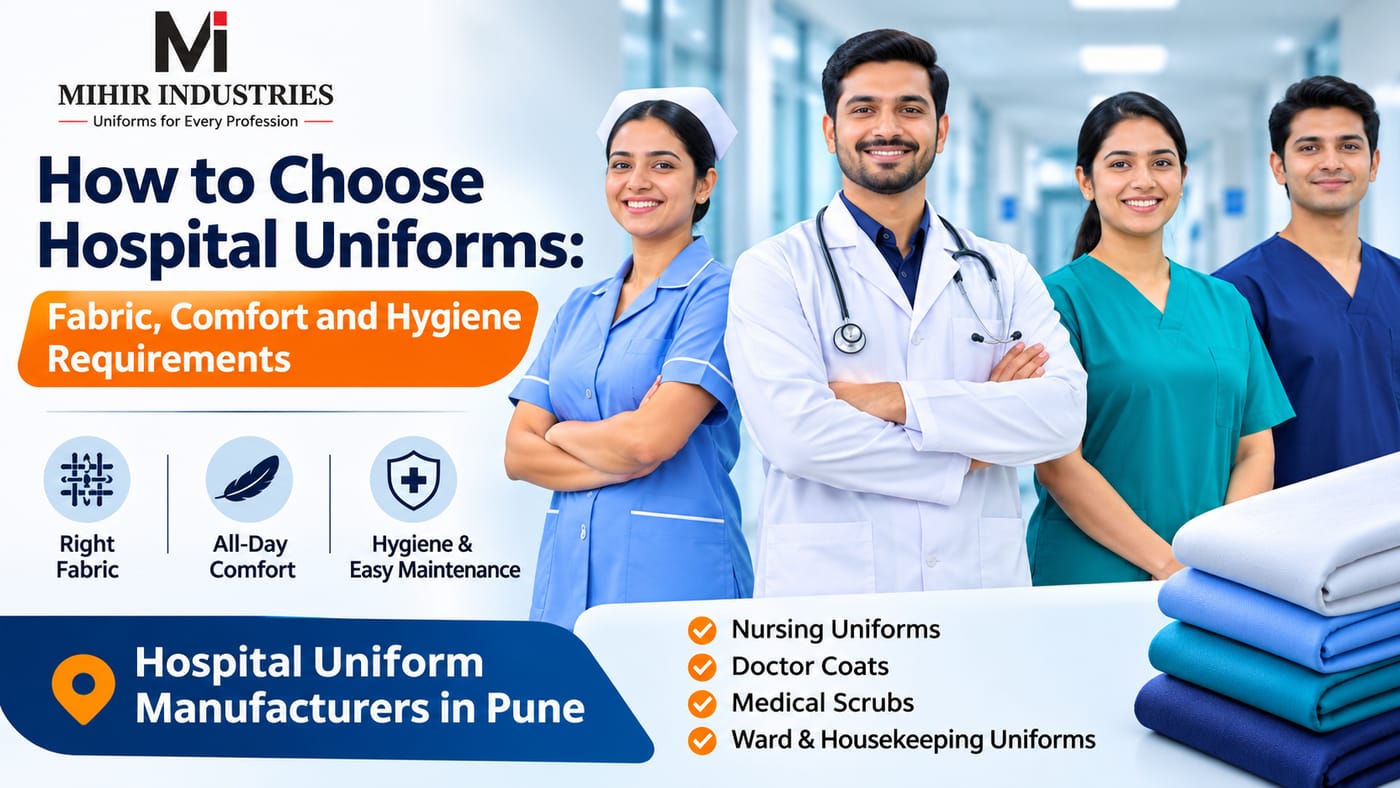
Choosing the right hospital uniform is an important decision for hospitals, clinics, diagnostic centres, nursing homes and other healthcare facilities. Medical professionals work for extended hours, move continuously between patient rooms and departments, and require clothing that supports comfort, hygiene and a professional appearance.
A suitable uniform should offer more than an attractive design. Fabric quality, breathability, stitching strength, ease of washing, colour retention and proper fitting all contribute to its everyday performance.
For healthcare organisations looking for reliable Hospital Uniform Manufacturers in Pune, understanding these factors can make bulk purchasing easier and more cost-effective.
Whether you are purchasing nursing uniforms, doctor coats, medical scrubs or housekeeping uniforms, this guide explains what to consider before selecting a uniform manufacturer or supplier.
Hospital uniforms are an essential part of healthcare operations. Doctors, nurses, laboratory technicians, ward assistants and housekeeping employees have different responsibilities, so their clothing requirements are not always the same.
A well-designed hospital uniform offers several practical advantages:
Hospitals should select uniforms according to the nature of each role rather than choosing one design for every employee.
Fabric selection is one of the most important factors when purchasing medical clothing. Healthcare employees need uniforms that feel comfortable, retain their shape and withstand frequent laundering.
Here are some commonly considered fabric options.
Cotton is a popular option for uniforms because of its softness and breathability.
Advantages:
Things to consider: Pure cotton may wrinkle more easily and can shrink if it is not properly processed. Hospitals should check shrinkage and colourfastness before placing large orders.
Polyester is widely used in workwear because of its durability and relatively easy maintenance.
Advantages:
Things to consider: Some polyester fabrics may feel less breathable, particularly in warm environments. Fabric construction and finishing influence comfort.
Poly-cotton combines cotton and polyester to balance comfort and durability.
Advantages:
For hospitals purchasing uniforms in bulk, poly-cotton can be a practical option when the blend, construction and finishing suit the intended working conditions.
| Fabric | Main advantage | Consideration |
|---|---|---|
| Cotton | Softness and breathability | Wrinkling and shrinkage |
| Polyester | Durability and quick drying | Breathability varies |
| Poly-cotton | Balanced comfort and durability | Blend ratio matters |
Buying tip: Always request fabric swatches and test samples before confirming a bulk order. Compare the material after washing rather than evaluating it only in its new condition.
Healthcare professionals frequently work long shifts. Their uniforms should allow them to move, bend, walk and perform daily responsibilities without unnecessary discomfort.
When evaluating medical uniforms, consider the following factors.
Uniforms should not be excessively tight or loose. A comfortable fit allows employees to perform their duties without restriction.
Choose materials that support airflow and feel comfortable in the hospital's working environment. The fabric should be appropriate for the department, temperature and duration of use.
Heavy clothing can become uncomfortable during extended shifts. Consider fabric weight, garment design and layering requirements before selecting a uniform.
Nurses, doctors and technicians may need pockets for small work-related essentials. Pocket placement should be practical without creating unnecessary bulk.
Check seams, hems, necklines and sleeve construction. Rough internal seams or poorly finished edges can cause irritation during prolonged use.
Hygiene is particularly important in healthcare settings. Uniform selection should support the hospital's established infection prevention, laundry and garment-handling procedures.
It is important to understand that no ordinary uniform fabric automatically makes a garment infection-proof. Fabric choice must work alongside appropriate laundering, handling and replacement practices.
Consider these points before purchasing:
Easy-to-wash materials: Select fabrics that can withstand the laundering temperatures and cleaning processes specified by the hospital.
Colour retention: Check whether the fabric maintains its colour after repeated washing. This is especially important for department-specific uniforms.
Shrinkage control: Pre-shrunk or properly processed fabrics can help maintain consistent garment sizing.
Seam and stitching quality: Strong stitching helps prevent seams from opening during regular use and washing.
Separate garment handling: Hospitals should follow their infection-control procedures for collecting, transporting, washing, storing and distributing uniforms.
Before approving a fabric, request information about its recommended washing instructions, colourfastness, shrinkage and suitability for repeated laundering.
Not every healthcare professional requires the same uniform. A hospital should consider each department's responsibilities when finalising its uniform designs.
Nurses require comfortable clothing that supports continuous movement and patient-care responsibilities.
Common options include:
Hospitals looking for reliable Nursing Uniform Suppliers Pune should evaluate fabric comfort, fitting, pocket placement and consistent sizing.
Doctor coats are commonly selected for doctors, consultants, medical officers and other designated healthcare professionals.
Important considerations include:
Hospitals comparing Doctor Coat Manufacturers Pune should check the stitching, fabric quality and availability of consistent sizes.
Medical scrubs are practical clothing options for various healthcare departments.
A suitable scrub set should offer:
Ward assistants and housekeeping employees require uniforms designed for their specific daily responsibilities.
Consider durable materials, easy maintenance, suitable garment coverage and department-specific identification.
Even good-quality fabric may not deliver satisfactory results if the garment is poorly stitched.
Before selecting Medical Uniform Manufacturers Pune, inspect the complete garment rather than judging it only by appearance.
Check the following:
Ask for a sample garment and evaluate it through normal working conditions and the hospital's laundering process.
Customisation helps healthcare organisations maintain a coordinated appearance across departments.
A professional uniform manufacturer should be able to discuss suitable customisation options, including:
Hospitals should establish a clear uniform specification before production. This document can include fabric details, colour references, size charts, logo placement, garment measurements and stitching requirements.
Maintaining a standard specification also makes repeat orders easier.
Selecting the right manufacturer is as important as choosing the right fabric. A dependable supplier should understand bulk uniform requirements and maintain consistency across production.
Here are seven important factors to evaluate.
Look for a manufacturer with relevant experience in uniform production and garment construction.
Ask about available fabric types, blend ratios, fabric weights and finishing options.
Request samples to inspect the quality, fit, stitching and overall finish before confirming an order.
Discuss the number of garments required, production timelines and the manufacturer's ability to maintain consistent specifications.
Check whether the manufacturer can provide department-wise colours, logo embroidery and different garment styles.
Ask how fabric, measurements, stitching, finishing and final garments are inspected.
Choose a supplier who can clearly communicate specifications, pricing, delivery schedules and repeat-order requirements.
Businesses comparing Hospital Uniform Suppliers Pune should evaluate the complete manufacturing and supply process rather than selecting a vendor based only on the lowest quotation.
Use this checklist to make your purchasing decision more organised.
Following these steps can help hospitals reduce purchasing errors and maintain uniform consistency across departments.
Mihir Industries provides uniform manufacturing solutions for businesses and organisations looking for practical, professional and customised workwear.
Located in Chinchwad, Pune, Mihir Industries offers a hospital uniform range that includes nursing dresses, nurse caps, nurse jackets, tunic and trouser sets, nursing aprons and medical scrub sets.
For healthcare organisations, the important purchasing considerations include fabric selection, garment construction, fitting, customisation and consistent bulk-order specifications.
If you are comparing Hospital Uniform Manufacturers in Pune, Mihir Industries can be contacted to discuss your hospital's uniform requirements, preferred designs and order quantities.
Explore the Hospital Uniforms collection at Mihir Industries to understand the available product range.
Compare manufacturers based on fabric quality, stitching, garment samples, customisation options, sizing consistency, production capacity and delivery commitments. Always evaluate a sample before placing a bulk order.
Cotton, polyester and poly-cotton are commonly considered options. The best choice depends on comfort, breathability, durability, washing requirements and the working environment.
Poly-cotton can be a practical option because it combines cotton’s comfort with polyester’s durability. The appropriate blend ratio should be selected according to the hospital’s requirements.
Hospitals should check fabric quality, colourfastness, shrinkage, stitching, size consistency, comfort, logo placement and sample performance after laundering.
Yes, hospital uniforms can be customised with suitable logo embroidery, department-specific colours, name details and garment designs, depending on the manufacturer’s available services.
Nursing uniforms can include tunics, dresses, aprons and coordinated sets. Medical scrubs generally refer to practical tops and trousers designed for healthcare work. The appropriate design depends on departmental requirements.
Replacement frequency depends on garment condition, wear, laundering practices and hospital policies. Uniforms should be replaced when they become damaged, excessively worn or unsuitable for continued use.
Look for suppliers who provide clear fabric specifications, sample garments, customisation options, transparent quotations and dependable communication. Verify their product quality before confirming large orders.
Choosing the right hospital uniform requires careful consideration of fabric, comfort, hygiene, stitching quality and maintenance requirements. Hospitals should select garments according to the responsibilities of each department and establish clear specifications before placing bulk orders.
Working with an experienced manufacturer can simplify the purchasing process and help maintain consistent uniform standards.
If you are searching for Hospital Uniform Manufacturers in Pune, connect with Mihir Industries to discuss your nursing uniforms, medical scrubs, doctor coats and customised hospital uniform requirements.
Explore our hospital uniform collection and discuss your bulk uniform requirements with our team.